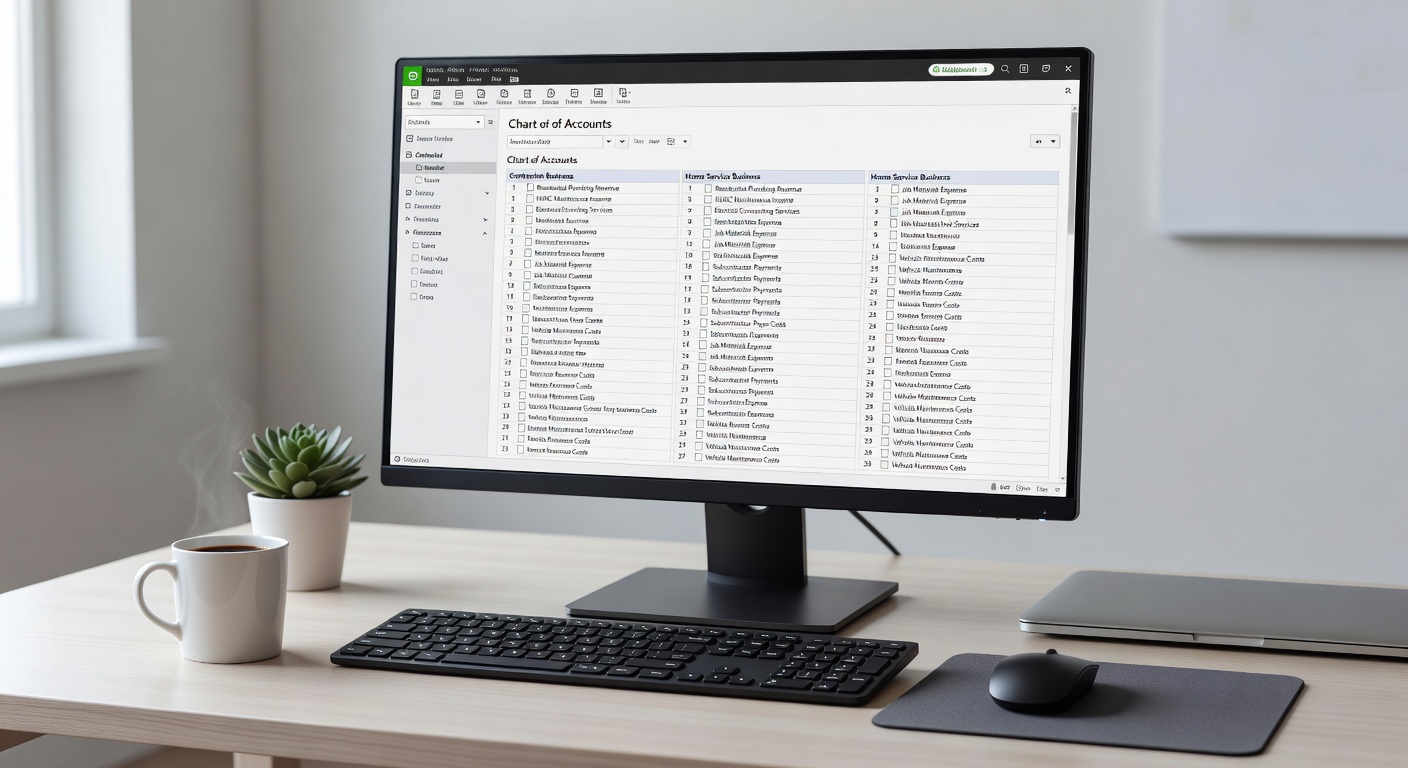
If you've spent any time in QuickBooks Online, you've seen the phrase 'chart of accounts.' Most business owners click past it. That's a mistake.
Your chart of accounts is the foundation every other bookkeeping function sits on. Build it right and your reports are clean and accurate. Build it wrong and every report you pull is showing you a partial picture.
What Is a Chart of Accounts?
A chart of accounts (COA) is a list of every financial category your business uses to record transactions. Think of it as a filing system for money. Every dollar that comes in or goes out gets assigned to one of these categories.
The categories fall into five types:
- Assets: What your business owns (bank accounts, equipment, vehicles, receivables)
- Liabilities: What your business owes (credit cards, loans, sales tax payable)
- Equity: The owner's stake in the business
- Income: Revenue from services
- Expenses: What it costs to run the business
Every transaction you record in QuickBooks hits at least one of these categories. Your chart of accounts determines which ones are available.
Why the Default QBO Setup Isn't Enough for Contractors
When you first set up QuickBooks Online, it gives you a generic chart of accounts based on your industry type. For most service businesses, it's either too broad or cluttered with accounts you'll never touch.
Too broad is a problem. If all your job costs sit in one 'Cost of Goods Sold' bucket, you can't tell if materials are eating your margin or if labor is the issue.
Too detailed creates a different problem. Twelve sub-accounts for materials means transactions get coded inconsistently and your reports turn into noise.
The goal is a COA that gives you useful breakdowns without creating extra work every time someone enters a transaction.
What a Contractor's Chart of Accounts Should Include
Here's a practical framework for home service businesses: landscaping, HVAC, plumbing, or electrical.
Income Accounts
Break your revenue into meaningful categories:
- Residential Service Revenue
- Commercial Service Revenue
- Installation Revenue
- Maintenance/Service Agreement Revenue
- Emergency Service Revenue (for HVAC or plumbing)
This lets you see which revenue streams are actually growing and which are flat. If you run a plumbing company, our page on bookkeeping for a plumbing business in Austin shows how we keep service and install revenue separate.
Cost of Goods Sold (Direct Job Costs)
These are the costs that exist because you did the job:
- Materials and Parts
- Subcontractor Labor
- Equipment Rental
- Permits and Fees
Operating Expenses
These are the costs to run the business regardless of jobs:
- Payroll (separate from job-site labor if possible)
- Vehicle Expenses (fuel, maintenance, insurance)
- Tools and Equipment
- Marketing and Advertising
- Office and Software Expenses
- Insurance (general liability, workers comp)
- Professional Services (bookkeeping, accounting, legal)
The Gross Profit Line: Why It Changes Everything
Separating job costs from operating expenses isn't just an accounting preference. It's how you see your gross profit clearly.
Gross profit = Revenue minus direct job costs. It tells you how much money you made before paying for overhead.
If your gross profit margin is 40%, you have $40 left out of every $100 in revenue to cover salaries, marketing, and everything else. If your gross margin is 15%, you're in trouble no matter how much work you're doing.
A properly built chart of accounts makes this number accurate. A messy one hides it.
Accounts to Avoid (Common Mistakes)
'Miscellaneous Expense': A dumping ground, not a category. If you can't tell where something belongs, your COA probably needs an account for it. Miscellaneous should be empty or close to it.
Too many sub-accounts: More detail isn't always better. Sub-accounts should only exist when the breakout tells you something you can act on.
Using asset accounts for expenses: Some business owners accidentally record equipment purchases as expenses, or vice versa. This distorts both your P&L and your balance sheet. Your bookkeeper should catch this during reconciliation.
Get This Set Up Right From the Start
A clean chart of accounts is one of the first things we look at when we bring on a new client. Whether you're starting from scratch or have years of messy QBO data to sort through, this structure is what makes every other report useful.
At KWK Books, we build chart of accounts structures for home service contractors. We know what categories matter in your industry and how to set them up so your financials tell you something real.
Ready to get your books under control? KWK Books works with home service businesses in Austin. Clean books, clear decisions, no jargon.
Book a Free Discovery Call